About
Musical improvisation unfolds through history as an ancient, yet ever-renewing tradition. The art of improvisation can be traced back to the Middle Ages and the Renaissance. All through the Baroque, Classical, Romantic, and modern eras, improvisation has remained a vital part within the evolution of music. It embodies the unexpected—an unbidden spark of imagination, a moment in which emotion takes spontaneous form—standing as one of the most enthralling manifestations of musical expression. For performers and listeners alike, improvisation becomes a dialogue of inner worlds, a moment when musical sensibilities converge and resonate in shared, unspoken understanding.
From a musical perspective, improvisation is a special art form. It is an open and free form of playing, and even more so, an instantaneous artistic creation. The improvisational performer enters the world of inspiration the moment they begin to play, and with keen musical ideas, rich emotions, and profound musical literacy, instantly composes a piece of music that reflects the musician's creativity and personality.
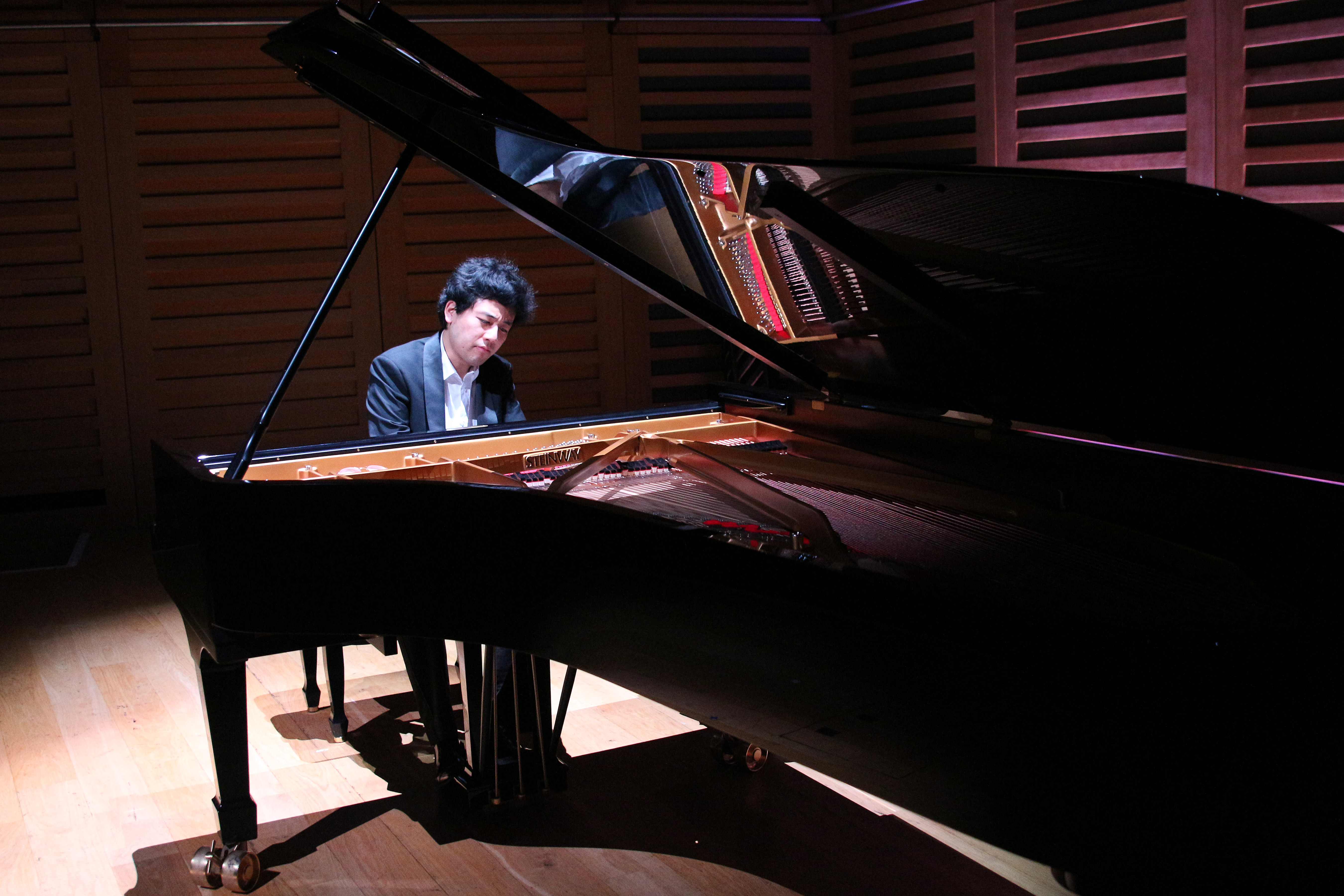
Improvisation is one of Yuanfan Yang’s distinctive gifts as both a pianist and a composer. Earlier in his life, he won the improvisation prize at the 4th Liszt International Youth Piano Competition in Weimar, Germany, and has given live improvisation broadcasts for RAI Radio in Rome and BBC Radio 3 in the United Kingdom. Two of his improvisations became particularly renowned: one at the Sydney International Piano Competition, where he reimagined the theme of Rachmaninoff’s Piano Concerto No. 3 in the stylistic idioms of Bach and Prokofiev (this has garnered nearly half a million views on Yuanfan’s social channels); and another at the Mariinsky Theatre in St. Petersburg, where he transformed the melody of the Russian folk song Moscow Nights through the expressive language of traditional Chinese music, including the use of the pentatonic scale. Improvisation initially appeared as encore performances at Yuanfan's concerts but later became part of his regular program; it eventually evolved into full-length improvisation concerts. In 2025, at the request of the audience, two full-length improvisation concerts were organised in London, and were enthusiastically received by the audience.
Perhaps the highest form of improvisation is one that derives from a given theme and style. Conventionally, Yuanfan invites any member of the audience to come onstage and play a set of notes, hum a melody, or even state a theme (such as the theme from a piece of music, or a film); then asks for a particular genre or composer's style. Yuanfan then improvises on the spot based on these cues.
For videos of Yuanfan Yang’s improvisations, please see the “Improvisation Videos” section under “Videos” on his website, or click the link below: